Bridging the co-operation gap: PolicyWISE calls for intergovernmental partnerships with a purpose
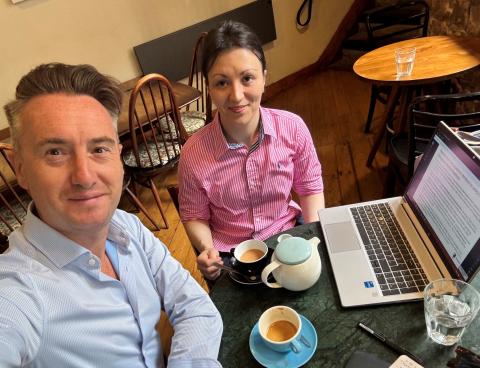
On June 22, PolicyWISE was invited to present its latest research on intergovernmental relations (IGR) at a workshop organised by the Centre on Constitutional Change at the University of Edinburgh. The event, titled ‘Place, Politics and Policies in Scotland and Wales’, brought together a diverse range of speakers to encourage and broaden discussions at this pivotal time for British politics.
Our presentation, Bridging the Co-operation Gap: Intergovernmental Partnerships with a Purpose, drew on both our recent polling and our latest report, The strength to co-operate: The case for collaborative governance to achieve shared policy goals across the United Kingdom, 2026–2029. Combined, this work forms part of PolicyWISE’s wider programme of research that examines how stronger intergovernmental collaboration can deliver more effective policy outcomes across the UK.
It is especially timely given the recent announcements from Andy Burnham, MP around this theme and his plans to strengthen English devolution, as this would call for more effective collaboration both between and across the four nations of the UK.
In our talk, we defined the ‘co-operation gap’ as the difference between public expectations of governmental collaboration and the perceived reality of current practice. We highlighted how, despite the UK’s diverse political landscape, all nations face many of the same policy challenges. These issues are also cross-border and cross-cutting, meaning no single government can effectively address them when working in isolation.
We therefore propose that IGR in the UK can be strengthened by focusing on these shared challenges, arguing that there is a collective benefit to be had from a more coordinated approach. Public opinion is already ahead of the politics on this issue, with people expecting - and wanting - closer working between governments, irrespective of where formal responsibility lies.
To further support our proposal, we demonstrated how this approach could work in practice by drawing on Australia’s Violence Against Women and Girls (VAWG) Strategy as a comparator. This evidenced how a multi-level governance system can align its priorities and actions successfully to tackle these pressing and common societal challenges.
The day was especially thought-provoking, and we are extremely grateful for the constructive feedback received on both the theory and practice of IGR, which will help shape our ongoing work in this area. We also look forward to building on these discussions through future collaborations on inter-parliamentary co-operation.