New poll reveals support for Burnham agenda to shift power away from Whitehall
The first comprehensive poll on his democratic renewal agenda - by PolicyWISE - reveals:
- Half of people in England support shifting power away from Westminster and towards regional and local authorities.
- There is scepticism about the impact No. 10 North will have – a third of Britons think it will make no difference.
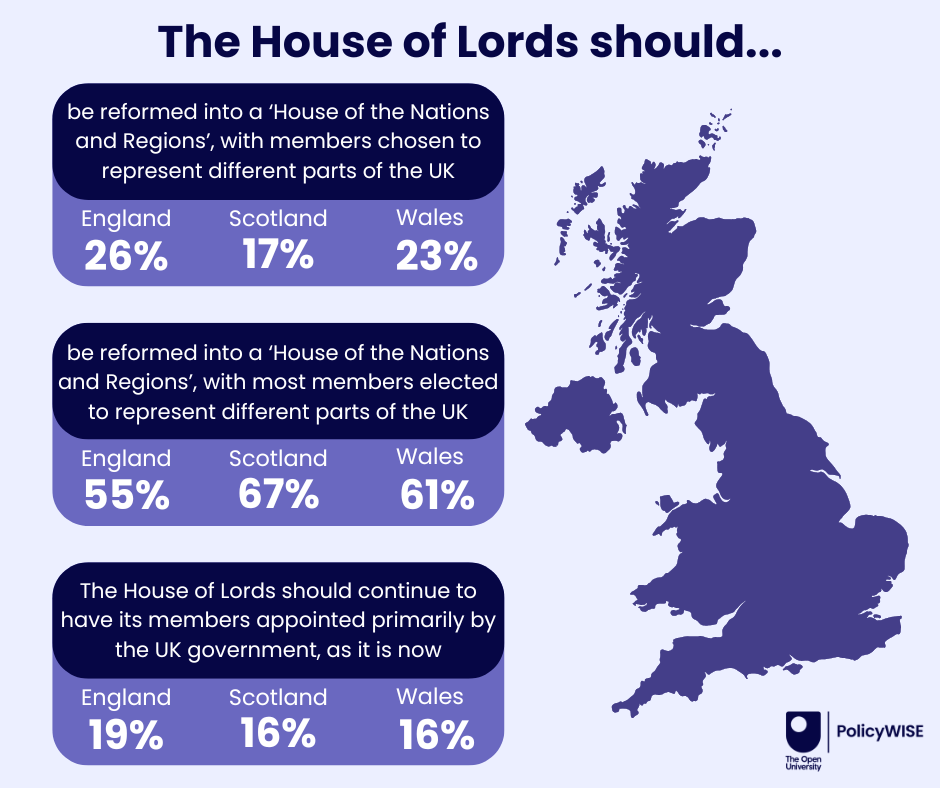
- 58% support reforming the House of Lords into a House of the Nations & Regions, with an elected house the most popular option.
Setting out what the results mean for the Burnham Administration, Dewi Knight, Director of PolicyWISE says:
“In the UK’s family of nations and governments, Whitehall has too often played the role of disapproving parent, rather than a genuine partner.
“Running these relationships from Number 10 North potentially means a new partnership approach to tackling UK-wide shared challenges such as ‘good growth’ or the cost of living. We know from our research that policymakers across the UK are up for the challenge of this new way of working – but it needs strong personal leadership from the Prime Minister.
“From a PolicyWISE perspective, the key test will be whether a shift in the PM’s address, and approach, can ensure better collaboration across our governments, leading to better outcomes for citizens.
“With even more power to be devolved within England, there are new opportunities for policy learning and co-operation across our nations and regions. The UK Government’s new role should be to encourage and facilitate these relationships, rather than get in the way or jealously guard old power.
“A key challenge for the Prime Minister now is to invest time in building intergovernmental relationships, work with other leaders to identify areas of shared interest across the UK, and facilitate joint teams and projects on major shared issues.”
* Polling conducted by More in Common on behalf of PolicyWISE between 10 - 13 July 2026. 2,198 people across England, Scotland and Wales.
Support for shift in power away from Whitehall
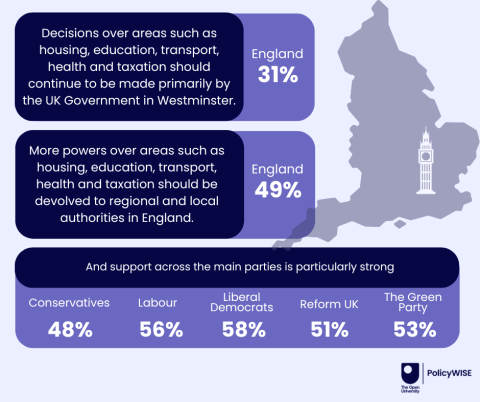
49% of people in England support regional authorities having more responsibility for taxation, housing & education with 31% wanting powers retained at Whitehall. Excluding those who say they ‘didn’t know’, support in England increases to 61%.
Support for this shift of power is popular with voters for all the main parties in England, with all at around 50% or higher, including Labour voters at 56% and Reform UK votes at 53%.
Majority support for House of the Nations and Regions
There is strong support across Great Britain for reforming the House of Lords, with a clear majority (58 per cent) wanting to see it evolve into a 'House of the Nations and Regions' to make it more representative of the UK as a whole.
Elected membership is favoured - 40 per cent backing this overall, rising to 46 per cent in both Scotland and Wales (39 per cent in England). Just 14 per cent say the Lords should continue to have its members appointed primarily by the UK government as now.
No 10 for the North (and other regions) - significant scepticism
A third of Britons say ‘No. 10 North' will make little or no difference. Even in the Northwest of England, more people (22%) think it’ll make no difference than those who say it’ll be a good thing for the ‘North’ (20%).
But people across Britain are more likely to say it will be a good thing for the North of England (18 per cent) than for the UK as a whole (9 per cent). .png)
Scots are more likely to say there should (43 per cent) than shouldn't (38 per cent) be a Prime Minister’s 'No. 10 Scotland' - although the lead is marginal. Support in Wales for a Prime Ministerial 'No. 10 Wales' is stronger and clearer: 45 per cent say there should be one, just 28 per cent say there shouldn't.
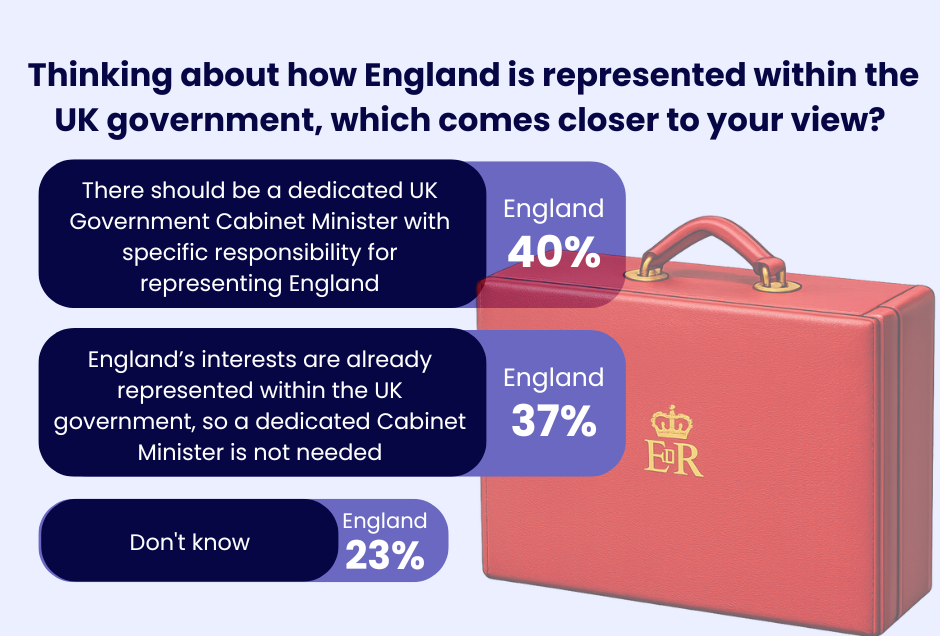
Cabinet Minister for England
The English public are split on the idea of a dedicated Cabinet Minister for England. 40% think there should be one, and 37% disagree. 56% of Scots and 62% of Wales are against the idea of a dedicated Cabinet Minister for England.